
When you are dealing with back pain, neck tension, headaches, stiffness, or sore muscles, it can be hard to know what type of care you actually need. Some people assume they should book a massage because their muscles feel tight. Others think chiropractic care is the better option because their spine or joints feel “off.”
The truth is that both chiropractic care and massage therapy can play an important role in pain relief, mobility, and overall wellness. However, they are not the same thing.
Chiropractic care focuses on the spine, joints, nervous system, and overall body alignment. Massage therapy focuses more directly on the muscles, soft tissue, circulation, and tension patterns. Depending on what is causing your pain, one may be more appropriate than the other — or the best results may come from combining both.
At Murphy Chiropractic and Wellness in Plainfield, IL, patients have access to both chiropractic care and therapeutic massage, allowing for a more complete approach to pain relief and long-term wellness.
What Does a Chiropractor Do?
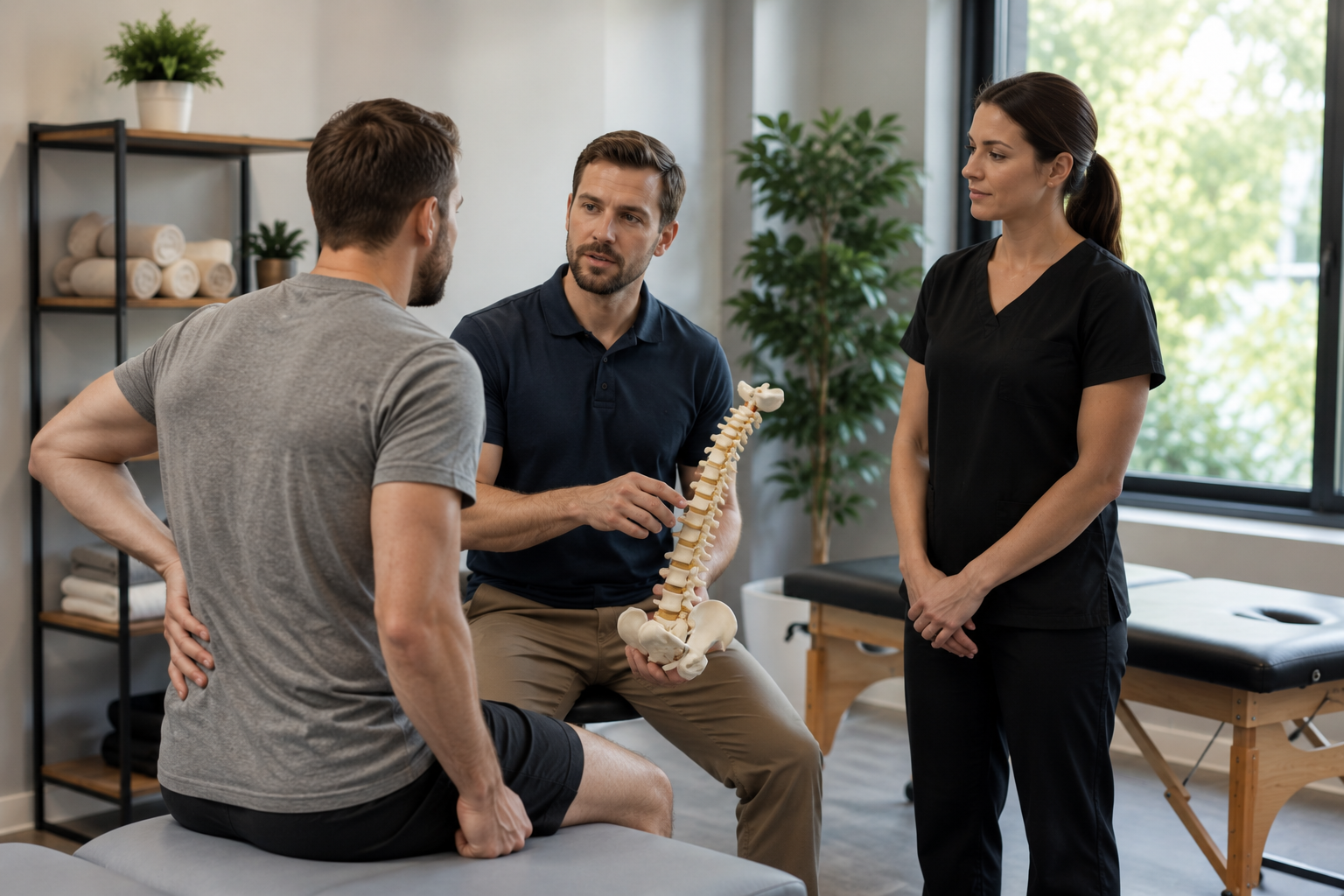
A chiropractor focuses on how the spine, joints, muscles, and nervous system work together. When your spine is not moving properly or your joints are restricted, it can affect how your body feels and functions.
Chiropractic care often includes adjustments designed to improve joint movement, reduce pressure, support better alignment, and help the body function more efficiently. While many people think chiropractic care is only for back pain, it can also help with neck pain, headaches, sciatica, posture problems, injury recovery, and mobility issues.
For example, someone with ongoing lower back discomfort may not only have tight muscles. They may also have restricted spinal movement, poor posture, core weakness, or nerve irritation. In that case, a massage may feel good temporarily, but it may not fully address why the pain keeps returning. If lower back pain has been a recurring issue, this guide on why your lower back pain won’t go away explains why the root cause matters.
What Does Massage Therapy Do?
Massage therapy focuses on the body’s soft tissues, including muscles, tendons, ligaments, and fascia. It is commonly used to reduce muscle tightness, improve circulation, support relaxation, and relieve stress-related tension.
When muscles become tight, overworked, or irritated, they can create pain and limit movement. Massage therapy can help release that tension and allow the body to move more freely.
Massage therapy may be helpful for:
Muscle soreness
Neck and shoulder tension
Stress-related tightness
Limited flexibility
Recovery after activity
General relaxation
Tension headaches
Muscle knots or trigger points
For many patients, massage therapy is especially helpful when pain is connected to muscle tension, repetitive strain, stress, or poor posture.
The Main Difference Between Chiropractic Care and Massage Therapy
The biggest difference is what each service primarily addresses.
Chiropractic care focuses more on the spine, joints, alignment, and nervous system. Massage therapy focuses more on muscles, soft tissue, tension, and circulation.
Think of it this way:
If your pain is coming from restricted joint movement, spinal misalignment, nerve irritation, or posture-related dysfunction, chiropractic care may be the better starting point.
If your pain is mostly related to muscle tightness, soreness, stress, or soft tissue tension, massage therapy may be a strong option.
However, the body does not separate these systems neatly. Tight muscles can pull on joints. Restricted joints can cause muscles to tighten. Poor posture can affect both the spine and the muscles. That is why many people benefit from using both chiropractic care and massage therapy together.
When Chiropractic Care May Be the Better Option
Chiropractic care may be the better choice when your pain feels deeper than simple muscle soreness or when symptoms keep returning even after rest, stretching, or massage.
You may want to consider chiropractic care if you are dealing with:
Recurring back pain
Neck pain or stiffness
Pain after a car accident
Whiplash symptoms
Sciatica or radiating leg pain
Headaches connected to neck tension
Limited range of motion
Posture-related discomfort
Pain that returns after temporary relief
Numbness, tingling, or nerve-like symptoms
Chiropractic care is often useful when the problem involves how the spine and joints are moving. For example, if you have sciatic nerve pain, the issue may involve nerve irritation, disc pressure, or spinal mechanics. In that case, learning more about effective sciatic nerve pain relief can help you better understand how chiropractic care may support recovery.
Chiropractic care may also be important after injuries. If your pain began after a fall, sports injury, workplace strain, or car accident, your body may need more than muscle relaxation. You may need an evaluation of joint movement, posture, alignment, and function. This is why chiropractic care can be valuable when trying to recover from an injury faster.
When Massage Therapy May Be the Better Option
Massage therapy may be the better choice when your pain is primarily muscular or stress-related. If you feel tight, tense, sore, or overworked, massage can help release soft tissue restrictions and promote relaxation.
You may want to consider massage therapy if you are dealing with:
Muscle knots
Shoulder tension
Stress-related tightness
General soreness
Muscle fatigue
Tight hips or hamstrings
Tension from sitting at a desk
Mild stiffness without nerve symptoms
Recovery after exercise
Massage therapy can be especially helpful for people who carry stress in their neck, shoulders, or upper back. It can also support flexibility, relaxation, and circulation.
For patients who already receive chiropractic care, massage therapy may help the body respond better to adjustments by reducing muscular tension around the spine and joints.
Why Pain Often Involves Both Joints and Muscles
Pain is rarely caused by only one structure. The spine, joints, muscles, nerves, and connective tissues all work together. When one area is not functioning well, another area often compensates.
For example, poor posture can cause the head and shoulders to shift forward. This can place stress on the neck and upper back joints. As those joints become irritated, the surrounding muscles may tighten to protect the area. Over time, this can lead to headaches, shoulder tension, neck pain, and reduced range of motion.
In this situation, massage therapy may reduce muscle tightness, while chiropractic care may help improve joint movement and alignment. Both can be valuable, but they work in different ways.
The same idea applies to lower back pain. Tight hip flexors, weak core muscles, pelvic imbalance, and spinal restriction can all contribute to discomfort. Stretching may help, but it may not be enough by itself. If flexibility is a concern, this article on stretching exercises from a chiropractic perspective can help explain why consistent mobility work matters.
Can Chiropractic Care and Massage Therapy Work Together?
Yes. In many cases, chiropractic care and massage therapy work extremely well together.
Massage therapy can help relax tight muscles before or after an adjustment. Chiropractic care can help improve joint movement and spinal function. Together, they can support better mobility, less tension, and more complete pain relief.
This combination may be especially helpful for people dealing with:
Chronic back pain
Neck stiffness
Headaches
Postural tension
Sports injuries
Work-related strain
Muscle weakness
Recurring pain patterns
Injury recovery
For example, someone with muscle weakness may need more than relaxation. They may need a care plan that considers nerve function, spinal mechanics, posture, and strengthening. Murphy Chiropractic’s blog on comprehensive chiropractic treatment for muscle weakness goes deeper into why weakness can sometimes point to a larger musculoskeletal issue.
Which One Should You Try First?
The right starting point depends on your symptoms.
If your pain is sharp, recurring, radiating, or connected to an injury, chiropractic care may be the better first step. This allows the chiropractor to evaluate the spine, joints, nerves, posture, and movement patterns.
If your pain feels like general tightness, soreness, or stress-related muscle tension, massage therapy may be a good place to start.
However, if you are unsure, the safest option is to get evaluated first. A professional assessment can help determine whether your pain is primarily muscular, joint-related, nerve-related, or a combination of several factors.
You should especially avoid guessing if you have:
Pain that radiates into your arms or legs
Numbness or tingling
Pain after a car accident
Persistent headaches
Severe stiffness
Pain that keeps coming back
Weakness in the arms or legs
These symptoms may require a more detailed evaluation before deciding on the right treatment approach.
What If Massage Feels Good But the Pain Comes Back?
This is very common. Massage can provide meaningful relief, but if the pain keeps returning, that may be a sign that the root cause has not been fully addressed.
For example, if your shoulder muscles are always tight because your neck and upper back are not moving properly, massage may temporarily reduce the tension. But unless the joint restriction, posture issue, or movement imbalance is corrected, the muscles may tighten again.
That does not mean massage is not working. It means massage may only be one part of the solution.
Chiropractic care can help identify whether spinal movement, alignment, or nerve irritation is contributing to the recurring tension.
What If Chiropractic Adjustments Help But Muscles Stay Tight?
This can also happen. If the spine is moving better after an adjustment, but the surrounding muscles remain tight, massage therapy may help release the soft tissue tension that has built up over time.
Muscles can “remember” stress patterns. If you have been sitting poorly, compensating after an injury, or carrying tension for years, it may take more than one type of care to retrain the body.
In this case, combining chiropractic care with massage therapy may provide better long-term results than using either service alone.
The Role of Lifestyle and Daily Habits
Whether you choose chiropractic care, massage therapy, or both, your daily habits matter. Pain relief is not only about what happens during an appointment. It is also influenced by how you sit, sleep, move, lift, exercise, and manage stress.
To support better results, consider:
Taking movement breaks during the day
Improving your workstation setup
Stretching consistently
Strengthening your core
Staying hydrated
Avoiding prolonged poor posture
Sleeping with proper support
Listening to early pain signals
Small daily changes can help your care plan work more effectively and reduce the chances of pain returning.
Visit Murphy Chiropractic and Wellness in Plainfield, IL
If you are unsure whether chiropractic care or massage therapy is right for your pain, Murphy Chiropractic and Wellness can help you understand your options.
Located in Plainfield, IL, Murphy Chiropractic and Wellness offers chiropractic care, acupuncture therapy, and therapeutic massage to support natural pain relief, mobility, and whole-body wellness.
Whether you are dealing with back pain, neck tension, headaches, muscle soreness, injury recovery, or recurring stiffness, the right care plan can help you move better and feel better.
If your pain keeps coming back or you are not sure where to start, schedule an appointment with Murphy Chiropractic and Wellness and take the next step toward lasting relief.
FAQ Section
Is chiropractic care better than massage therapy?
It depends on the cause of your pain. Chiropractic care may be better for joint restriction, spinal alignment, nerve irritation, and recurring pain. Massage therapy may be better for muscle tightness, soreness, stress, and soft tissue tension.
Can I get chiropractic care and massage therapy together?
Yes. Many patients benefit from both. Massage therapy can help relax tight muscles, while chiropractic care can help improve joint movement and spinal function.
Should I see a chiropractor or massage therapist for back pain?
If your back pain is recurring, sharp, radiating, or connected to an injury, chiropractic care may be the better first step. If it feels like mild muscle soreness or general tightness, massage therapy may help.
Why does my pain come back after a massage?
Pain may return after a massage if the root cause involves joint restriction, posture problems, nerve irritation, or movement imbalance. Massage can relieve tension, but it may not fully correct the underlying issue.
Can massage therapy help chiropractic adjustments last longer?
Massage therapy may help reduce muscle tension around the spine and joints, which can support better movement and make chiropractic care more effective for some patients.
Is massage therapy only for relaxation?
No. While massage can be relaxing, it can also help with muscle tension, soreness, circulation, mobility, and soft tissue recovery.
How do I know which treatment I need?
The best way to know is to get evaluated. A professional can help determine whether your pain is muscular, joint-related, nerve-related, or a combination of several factors.