

Top Wellness Keynote Speakers and Chiropractors Agree: The Spine Is the Foundation of Your Vitality Advantage
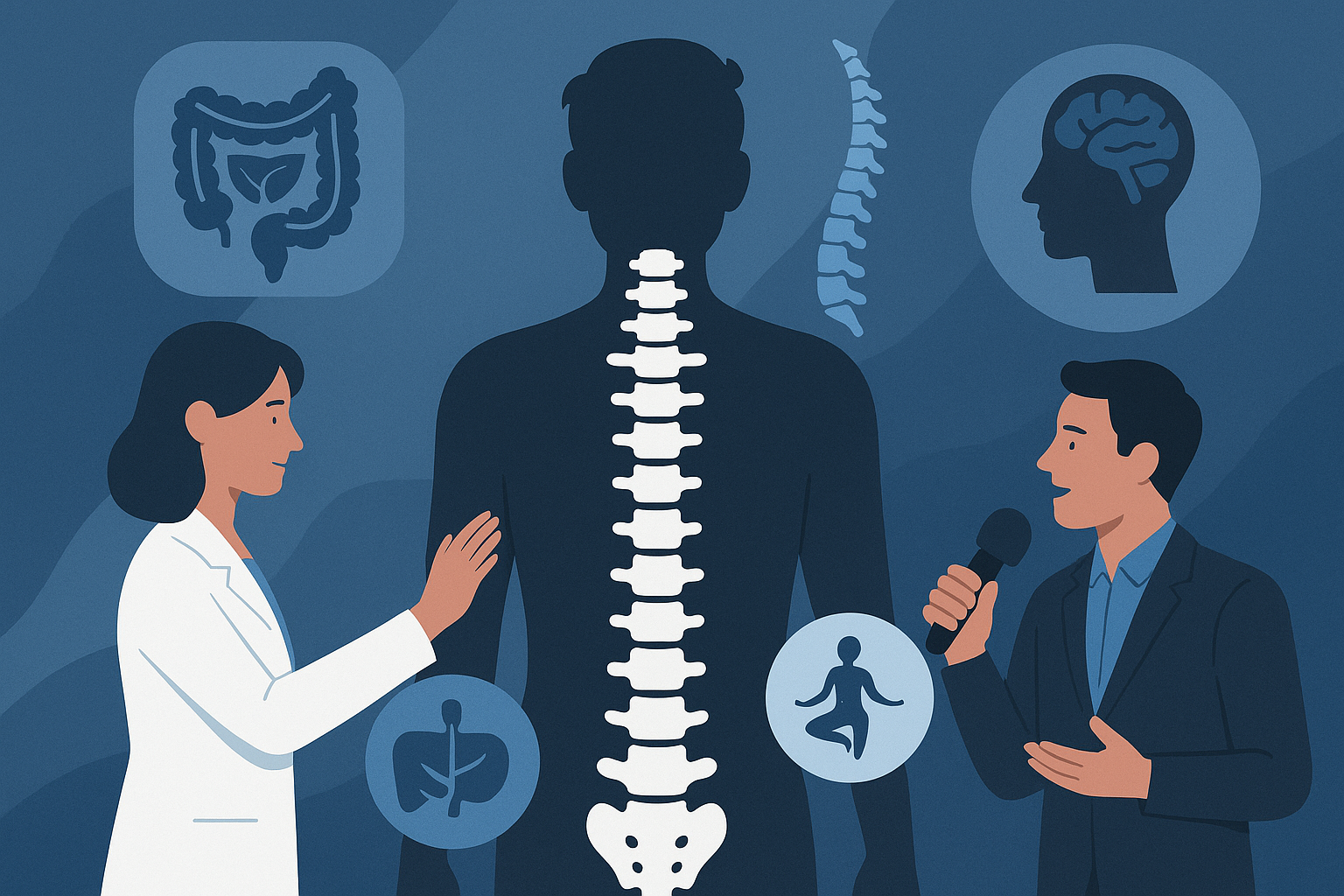
Dr. Partha Nandi, bestselling author and keynote speaker, has earned fame and saved lives with his message of holistic wellbeing and deep vitality.
He recognizes the deep connection between daily habits and choices and your health, mood and performance.
Much of his message centers around the components of gut health, such as food, rest and exercise. He also advocates for probiotics, fresh air and all the other small changes that can precipitate a huge shift in your own health.
But if Dr. Nandi had to choose one part of the body to focus on for your next health initiative, his answer might surprise you.
The spine is an incredible region of the body, connecting to all the major systems and providing the communication between the brain and the muscles of the body. It is also a complex system of nerves, bones, connective tissues and supporting musculature.
Its deep connections to emotional health by the PSOAS muscle are still being studied and provide many marvellous revelations to doctors and scientists alike.
From the sacrum and lumbar vertebrae to the cervical spine and brainstem, this intricate structure is the literally backbone of health–and problems with the spine cause cascading effects throughout the body.
When wellness keynote speakers and chiropractors are forced to choose a piece of the skeletal system to work on first, they are sure to choose the spine.
The Root of It All: The Sacrum’s Connection to Emotional Wellbeing
The PSOAS muscles connect the lowest parts of the spine to the pelvis. It’s an important muscle for mobility and flexibility. But are you aware of its connection to mental health?
Because the PSOAS tends to hold tension and is difficult to reach with relaxing massage, it has been referred to as the trauma muscle. Many people with traumatic incidents in their past have a tight PSOAS, limiting their mobility and causing degradation of their joints over time.
So if you want a stretch that can help serve a lot of functions, including helping you to move past stored stress, top wellness keynote speakers would recommend stretches that help loosen the PSOAS and mobilize the lower spine.
Posture: How Your Self-Carriage Influences Your Mood, Mobility, Gut, and More
We all know we should stand up straighter, sit squarely in our chairs, and keep our shoulders back.
But too often when we actually stop to think about our posture, we find that we are slouching with rounded backs and shoulders and our heads thrust forward.
This can lead to a spiral of self recrimination, but it isn’t always our fault. Vision problems contribute to the way we tend to read hunched over our phones, books or computers.
As we age, our muscles tend to grow slack, making it more and more difficult to keep the spine straight and shoulders back for hours at a time.
Undiagnosed hearing concerns can also lead to craning our necks to hear better, contributing even more to a rounded posture.
And yet the health benefits of good posture remain unchanged. Sitting upright relieves strain on muscles, alleviates pinching of nerves, and relieves compression of the thoracic and pelvic organs–resulting in better performance and a surprising feeling of lightness and relief.
Wellness keynote speakers like Partha Nandi, MD recommend small habit changes that can make a big difference in your posture.
Give yourself frequent cues to check and correct your posture throughout your day. If you are hunching over your devices and books, consider reading glasses or larger print so that you will be able to read more easily without scrunching.
And consider whether your struggle to hear merits looking into hearing aids, or whether perhaps you will be better off just habitually moving a little step closer in conversations to hear better without straining.
The Cervical Spine: Strength Meets Vulnerability
The Cervical spine from the shoulders to the skull is an amazing structure, protecting the most vital parts of the spinal cord and providing structural support to many of the strongest muscles in the body.
The postural problems that can plague the rest of the spine have the strongest effect on the neck, and tensions throughout the body often settle in muscles connected to the cervical spine, such as the muscles of the neck and jaw.
So if you experience neck pain and tension, maybe it’s time to give thought to a chiropractic adjustment, some new postural habits, and find ways to relieve stiffness and stress so that you will put less strain on this delicate yet powerful skeletal structure.
Top wellness keynote speakers agree that the spine is central to the body’s health and function, and that when you change your habits for maximum spinal health, the benefits contribute greatly to the vitality advantage that can transform your whole body and life.