
Pickleball Injuries Are Rising: Common Aches, Prevention Tips, and When to See a Chiropractor
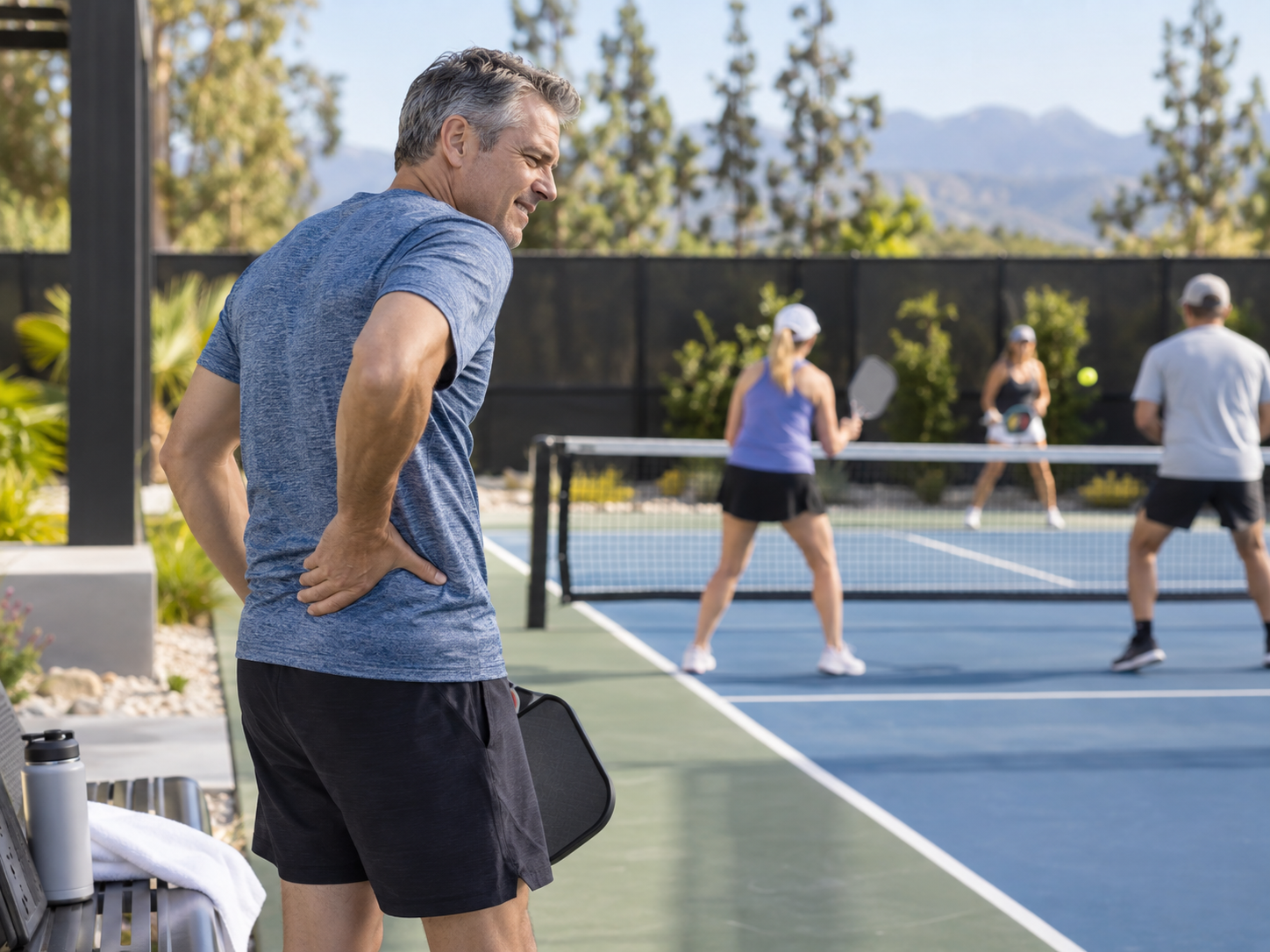
Pickleball is fun, social, and accessible, but the quick stops, twisting movements, reaching, and repeated swings can place more stress on the body than many new players expect. Understanding the most common pickleball injuries can help you stay active while recognizing when soreness may need professional attention.
Pickleball has quickly become one of the most popular recreational activities in the country. Players of different ages and fitness levels are taking up the sport because it is social, competitive, and relatively easy to learn.
But easy to learn does not necessarily mean easy on the body.
Pickleball requires repeated bending, lateral movement, sudden starts and stops, overhead reaching, rotation through the torso, and quick reactions. For someone who has recently increased their activity level or plays several times each week, those movements can place considerable demand on the muscles and joints.
That is one reason pickleball-related aches and injuries are becoming a more common topic in sports medicine and musculoskeletal care.
At Murphy Chiropractic and Wellness in Plainfield, IL, active adults may seek chiropractic care when back pain, neck tension, shoulder discomfort, mobility problems, or recurring soreness start interfering with the activities they enjoy.
- Why pickleball can lead to aches and injuries
- Common areas affected by the sport
- Why beginners may be especially vulnerable
- How warming up and mobility work can help
- When soreness is more than normal post-game fatigue
- How chiropractic care may support musculoskeletal recovery
Why Are Pickleball Injuries Becoming More Common?
Part of the answer is simple: more people are playing.
Pickleball has expanded far beyond its reputation as a recreational activity for retirees. Younger adults, competitive athletes, families, and weekend warriors are now playing regularly.
Another factor is how approachable the sport feels. Someone who has not exercised consistently may be comfortable stepping onto a pickleball court because the court is smaller than a tennis court and the game is relatively easy to begin playing.
The cardiovascular demands may feel manageable, but the body still has to tolerate sudden changes in direction, quick reaches, lunges, twisting, bending, and repetitive swinging.
A common problem: Your enthusiasm can improve faster than your body's conditioning. Playing several times per week before developing adequate strength, mobility, balance, and recovery habits may increase strain on muscles and joints.
Common Pickleball Aches and Injuries
Pickleball injuries can involve many different parts of the body. Some happen suddenly during a fall or quick movement, while others develop gradually from repetitive use.
Lower Back Pain
Repeated bending, reaching low for the ball, lunging, and rotating through the torso can place stress on the lower back. Fatigue and limited hip mobility may increase that demand.
Shoulder Pain
Serving, reaching, and repetitive paddle swings can irritate muscles and tissues around the shoulder, particularly when someone suddenly increases how often they play.
Elbow and Forearm Pain
Repetitive gripping and swinging can overload the muscles and tendons around the forearm and elbow, creating discomfort similar to other racket-sport overuse injuries.
Knee Discomfort
Side-to-side movement, short sprints, lunging, and rapid direction changes can place significant demand on the knees.
Ankle and Foot Problems
Quick changes in direction and awkward steps may contribute to ankle sprains, Achilles problems, or foot soreness.
Upper Back and Neck Tension
Rotating, reaching, maintaining an athletic stance, and repeatedly tracking the ball may contribute to muscular tightness through the neck, shoulders, and upper back.
Why Pickleball Can Be Hard on the Lower Back
The lower back plays an important role in almost every pickleball point. Players repeatedly bend forward, rotate their torso, reach for low shots, accelerate, decelerate, and return to an athletic stance.
Those movements are not necessarily harmful. Problems are more likely to develop when the body does not have enough mobility, strength, or recovery capacity for the amount of play.
Tight hips, weak core muscles, fatigue, limited spinal mobility, and poor movement mechanics can all cause the lower back to absorb more load.
If your lower back discomfort continues outside the court, our guide to why lower back pain keeps coming back explains several factors that may contribute to recurring symptoms.
Shoulder and Upper Back Pain From Pickleball
Pickleball may not involve the same serving mechanics as competitive tennis, but the shoulder still performs hundreds of repetitive movements during a long session.
Reaching for wide shots, hitting overheads, serving, and repeatedly accelerating and decelerating the paddle can fatigue the shoulder and upper-back muscles.
Players may also compensate when they lack mobility through the thoracic spine or shoulder. Instead of distributing rotation throughout the body, one area may end up doing more work.
If discomfort develops around the shoulder blades, read our guide to upper back pain between the shoulder blades .
Players experiencing neck or shoulder tightness may also find our article about neck and shoulder pain helpful.


Why New Pickleball Players May Be More Vulnerable
One of the appealing things about pickleball is that someone can begin playing quickly without months of training.
Unfortunately, that can also encourage people to do too much too soon.
A person who normally exercises once or twice per week may suddenly start playing pickleball three, four, or five times per week because they enjoy the game.
Their coordination may improve quickly, but muscles, tendons, joints, and connective tissues need time to adapt to repeated physical stress.
This mismatch between activity and conditioning can contribute to both overuse problems and fatigue-related injuries.
Is Pickleball Soreness Normal?
Mild muscle soreness after trying a new activity can be normal, particularly when someone has recently increased their exercise level.
Normal exercise soreness tends to feel like general muscular tenderness and gradually improves.
Pain deserves more attention when it is sharp, keeps returning, changes the way you move, or becomes worse each time you play.
Signs It May Be More Than Normal Soreness
- Pain occurs during ordinary daily activities.
- The same area hurts every time you play.
- You have to change your swing or movement because of pain.
- Your range of motion has decreased.
- You experience swelling or significant tenderness.
- Pain wakes you at night.
- Numbness or tingling develops.
- You notice weakness in an arm or leg.
- Your symptoms continue getting worse rather than improving.
How to Reduce Your Risk of Pickleball Injuries
You cannot prevent every sports injury, but good preparation can reduce unnecessary strain and help your body tolerate the demands of the game.
Warm Up Before You Play
Give your body time to transition from rest to activity. Light walking, controlled movement, shoulder motion, hip mobility, and gentle dynamic exercises can be more appropriate before play than immediately attempting maximum-effort movements.
Build Up Gradually
If you are new to pickleball, avoid going from little activity to several long sessions each week. Give your muscles and joints time to adapt.
Improve Strength
Strength through the legs, hips, core, upper back, and shoulders can help the body control the quick movements required on the court.
Work on Mobility
Limited mobility in the hips, ankles, shoulders, or spine can cause other areas to compensate. Regular mobility work may help distribute movement more efficiently.
Use Appropriate Footwear
Pickleball involves significant lateral movement. Shoes designed to provide stability for court sports may offer better support than footwear designed primarily for straight-line running.
Give Yourself Recovery Time
More play is not always better. Recovery days allow muscles and connective tissues to adapt, particularly after long or intense sessions.
Mobility Matters More Than Many Players Realize
Pickleball often exposes mobility limitations people do not notice during everyday activities.
You may feel perfectly comfortable walking around the house but discover limitations when attempting a deep lateral step, rotating quickly, or reaching for a low ball.
Improving mobility does not simply mean becoming more flexible. It also involves being able to control your body through a useful range of motion.
This is especially important as we get older. Staying active is valuable, but balance, mobility, strength, and injury prevention should develop alongside increased activity.
Should You Play Through Pickleball Pain?
One of the biggest mistakes recreational athletes make is assuming they should continue playing until pain becomes severe.
If discomfort appears every time you play, changing your movement to avoid pain may create compensation elsewhere in the body.
For example, someone protecting a sore knee may shift more load to the opposite leg. A player with shoulder pain may alter their swing and create additional stress through the neck, elbow, or upper back.
Recurrent pain is information. It does not necessarily mean something serious is wrong, but it is worth understanding why the same problem keeps returning.
How Chiropractic Care May Help Active Pickleball Players
Chiropractic care can be one part of a broader musculoskeletal care strategy for active adults experiencing back pain, neck stiffness, joint restriction, muscle tension, or mobility limitations.
A chiropractor can evaluate more than just the specific location that hurts. Assessment may include spinal movement, posture, range of motion, joint mobility, muscle tension, and movement patterns.
Improving Joint Mobility
When joints are not moving comfortably, surrounding muscles may compensate. Chiropractic care may help improve mobility in appropriate cases.
Addressing Movement Restrictions
Limited movement in one part of the body can increase demand elsewhere. Identifying those restrictions can help guide stretching, mobility work, and other supportive care.
Managing Muscle Tension
Pickleball can create tightness through the lower back, hips, shoulders, neck, and upper back. Depending on the patient, care may involve chiropractic treatment, therapeutic massage, stretching, or other supportive approaches.
Supporting a Return to Activity
The goal for many active patients is not simply to feel better sitting still. It is to return comfortably to the activities they enjoy.
Murphy Chiropractic has additional information about chiropractic care for sports injuries and how musculoskeletal care may fit into an active recovery plan.
Chiropractic Care vs. Massage After Pickleball
After several games, many players describe tight muscles rather than a specific injury. Massage therapy may be useful when muscular tension, soreness, or soft-tissue tightness is the primary concern.
Chiropractic care focuses more closely on joint mobility, spinal function, movement, and related musculoskeletal concerns.
Some active patients may benefit from both depending on their symptoms. Our guide to chiropractic care vs. massage therapy explains the difference in greater detail.
When Pickleball Injuries Need Medical Attention
Chiropractic care is not appropriate for every sports injury. Seek prompt medical evaluation after a significant fall or collision, suspected fracture or dislocation, severe swelling, inability to bear weight, major loss of strength, head injury symptoms, or severe and sudden pain.
If you are unsure how serious an injury may be, having it appropriately evaluated is more important than trying to play through it.
Don't Wait Until Pain Takes You Off the Court
One of the best things about pickleball is that it keeps people active. The goal should not be to avoid activity because an injury is possible. Instead, players can prepare their bodies for the demands of the sport, recover appropriately, and pay attention when pain begins repeating.
If your back, neck, shoulders, or joints feel different after you started playing pickleball, addressing the issue early may help you understand what needs to change before discomfort begins affecting everyday life.
Pickleball Pain Affecting Your Game?
If recurring back pain, neck stiffness, shoulder tension, or mobility problems are making it harder to stay active, Murphy Chiropractic and Wellness in Plainfield, IL can evaluate your musculoskeletal concerns and help you understand appropriate next steps.
Schedule an AppointmentFrequently Asked Questions About Pickleball Injuries
What are the most common pickleball injuries?
Pickleball injuries commonly affect areas such as the knees, ankles, shoulders, wrists, elbows, and back. Players can experience both sudden injuries from falls or quick movements and gradual overuse problems from repetitive play.
Why does my lower back hurt after pickleball?
Pickleball involves frequent bending, rotation, reaching, lunging, and rapid changes in direction. Limited hip mobility, fatigue, strength deficits, or existing back problems may increase stress on the lower back.
Can pickleball cause shoulder pain?
Repetitive swinging, overhead shots, reaching, and serving can place repeated demand on the shoulder. Persistent shoulder pain or weakness should be evaluated rather than repeatedly played through.
Should I play pickleball if I'm sore?
Mild post-exercise muscle soreness may improve with recovery. Sharp, worsening, recurrent, or movement-altering pain deserves more attention. Avoid continuing an activity when pain significantly changes how you move.
How can I prevent pickleball injuries?
Gradually increasing playing time, warming up, strength training, improving mobility, wearing appropriate court footwear, and allowing adequate recovery can all help reduce unnecessary strain.
Can a chiropractor help with pickleball-related back pain?
Chiropractic care may be helpful when back pain involves joint restriction, mobility limitations, muscle tension, or other musculoskeletal factors. A chiropractic evaluation can help determine whether this type of care is appropriate.
When should I stop playing and get an injury checked?
Consider an evaluation if pain keeps returning, interferes with normal movement, causes weakness or numbness, or becomes progressively worse. Significant falls, suspected fractures, severe swelling, head injuries, or inability to bear weight require prompt medical attention.
Is massage or chiropractic care better after pickleball?
It depends on the problem. Massage therapy primarily addresses muscular and soft-tissue tension, while chiropractic care focuses more on joint mobility, spinal function, and related musculoskeletal concerns. Some patients may benefit from both.