

Weighted Vest Walking & Rucking: Benefits, Back Pain Risks, and How to Train Safely
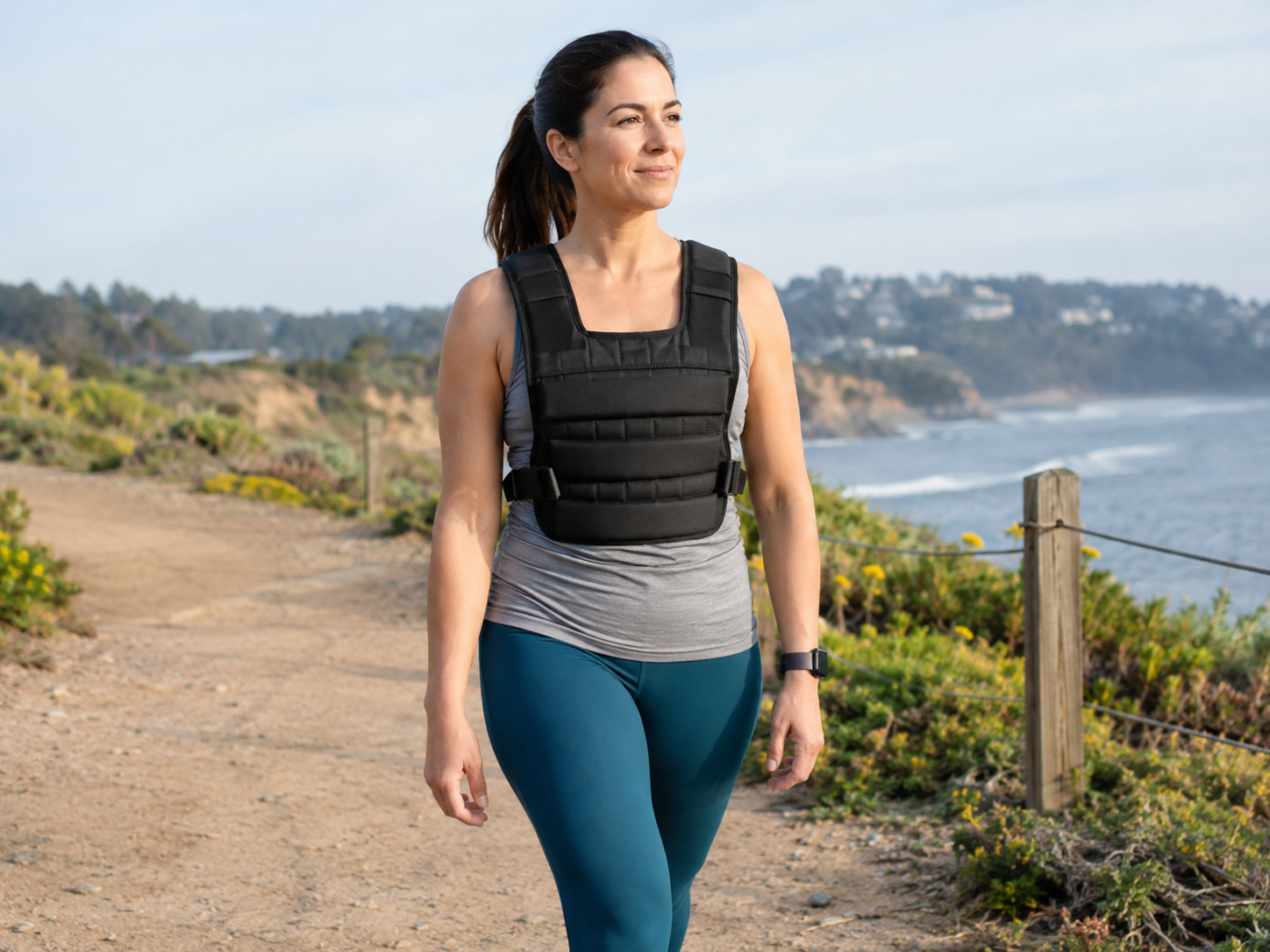
Weighted vests and rucking have become increasingly popular ways to make an ordinary walk more challenging. But adding weight also changes how much work your back, hips, knees, ankles, and muscles have to do. Before loading up and heading outside, it is important to understand how to progress safely and recognize when discomfort may be a warning that your body needs attention.
You may have noticed more people walking through neighborhoods, parks, and gyms wearing weighted vests or carrying weighted backpacks.
The idea is simple: take an activity almost everyone understands—walking— and add resistance. This can make the workout more challenging without requiring complicated equipment or a gym membership.
This style of exercise is often called rucking when the additional weight is carried in a backpack or rucksack. Weighted-vest walking follows the same general concept, although the weight is distributed around the torso instead of primarily behind the body.
For appropriately conditioned people, loaded walking can be an effective form of exercise. The problem occurs when someone assumes that because walking feels easy, adding weight must also be easy on the body.
At Murphy Chiropractic and Wellness in Plainfield, IL, active adults may seek care when a new workout routine begins contributing to recurring back pain, neck tension, joint discomfort, or changes in mobility.
- Why weighted vest walking and rucking have become popular
- How added weight changes the demands placed on your body
- Why lower back and neck pain can develop
- How weighted walking affects your knees, hips, and ankles
- Common mistakes beginners make
- How to progress more safely
- When workout soreness deserves professional evaluation
Why Are Weighted Vests and Rucking Suddenly So Popular?
Part of the appeal is simplicity. You do not need to learn a complicated exercise program. Instead, you add resistance to an activity you are probably already doing.
Weighted walking also fits easily into busy schedules. Someone can wear a vest during a neighborhood walk, while using a treadmill, or during certain fitness exercises.
For people who do not enjoy running, adding resistance to walking can make a familiar activity more physically demanding.
Rucking has also grown through outdoor fitness communities and social media. What was once associated primarily with military training has moved into everyday recreational fitness.
The important distinction: walking with added weight may look almost identical to ordinary walking, but your muscles and joints are managing a greater load with every step.
How Does a Weighted Vest Change the Way Your Body Works?
Your body constantly manages the force created by your own body weight. When you add external weight, your legs, hips, core, and spine must work harder to control that additional load.
Even a moderate amount of added resistance is repeated over hundreds or thousands of steps during a walk.
That does not automatically make weighted walking unsafe. The human body adapts to progressive resistance extremely well when training is appropriate.
Problems are more likely when the added load exceeds what your current strength, mobility, balance, or endurance can comfortably manage.
Can Weighted Vest Walking Cause Back Pain?
It can contribute to back discomfort in some people, particularly when they begin with too much weight or increase their walking distance too quickly.
Your lower back works with your abdominal muscles, hips, pelvis, and legs to keep your torso stable while you walk.
Adding external load means these structures have to manage more force. As fatigue develops, posture and walking mechanics may also change.
Someone may begin a walk standing comfortably upright but gradually start leaning forward, arching the lower back, shortening their stride, or altering how they move as the additional weight becomes tiring.
Factors That May Increase Back Strain
- Starting with more weight than your body is prepared for
- Walking much farther than usual
- Poorly fitted equipment
- Weak core or hip muscles
- Limited hip mobility
- Previous lower back problems
- Walking steep hills before developing adequate conditioning
- Increasing weight and distance at the same time
If lower back pain is already a recurring issue, adding external weight without first understanding the problem may aggravate symptoms.
Our guide to why lower back pain keeps returning explains several other factors that may contribute to ongoing discomfort.
What About Rucking With a Weighted Backpack?
A weighted backpack can affect the body differently from a vest because much of the load sits behind the torso.
If the backpack is heavy or positioned poorly, you may naturally lean forward to counterbalance the load. The shoulders and upper back also have to manage the pressure created by the straps and the weight behind you.
As fatigue develops, you may notice tension through the shoulders, between the shoulder blades, or through the lower back.
If upper-back discomfort becomes a recurring issue, our article about upper back pain between the shoulder blades explains how posture, muscle fatigue, joint restriction, and movement patterns may contribute.


Can Weighted Vests Cause Neck and Shoulder Pain?
Depending on the fit and design, a weighted vest can place pressure around the shoulders and upper torso.
The neck and upper-back muscles may also work harder to stabilize the body, especially during longer walks.
If someone already has rounded shoulders, forward-head posture, or significant upper-body tension, adding load can sometimes make that tension more noticeable.
This is one reason fit matters. A vest that moves excessively, hangs too low, or places uncomfortable pressure on the shoulders may change the way you carry your body.
What Happens to Your Knees, Hips, Ankles, and Feet?
Your spine is not the only part of the body affected by added weight. Every step also sends force through your feet, ankles, knees, and hips.
Someone whose joints tolerate normal walking comfortably may notice different symptoms once resistance is added.
Knees
Your knees repeatedly control your body weight during each step. Added resistance increases the muscular work required, particularly on hills and stairs.
Hips
The hips help stabilize the pelvis while walking. Weakness or limited mobility may become more noticeable when additional weight is carried.
Ankles
Your ankles help control balance and forward movement. Uneven terrain can become more demanding when carrying extra weight.
Feet
Added weight means increased loading through the feet with every step. Appropriate footwear and gradual progression become more important.
The Most Common Weighted-Vest Mistake: Too Much, Too Soon
The biggest issue with many fitness trends is not the activity itself. It is how quickly people increase the difficulty.
Someone may see another person walking comfortably with a heavy vest and assume they should start at a similar weight.
But that person may have months or years of training behind them.
Your muscles, joints, tendons, and cardiovascular system need time to adapt to additional resistance.
Adding too much weight too quickly can turn what should be progressive exercise into an unnecessary overload.
How to Start Weighted Vest Walking More Safely
If you are healthy enough for this type of exercise and decide to try it, gradual progression is usually more sensible than immediately testing how much weight you can carry.
Build a Walking Base First
If ordinary walking already leaves you significantly fatigued or uncomfortable, focus first on developing consistency without added weight.
Begin With a Light Load
The goal of an introductory session should be learning how your body responds—not proving how much weight you can carry.
Shorten Your First Weighted Walks
Do not automatically combine your normal walking distance with a new external load. A shorter session gives you an opportunity to assess how your back and joints respond.
Use Level Terrain Initially
Hills significantly increase muscular demand. Build comfort on flatter terrain before adding another variable.
Change One Variable at a Time
Avoid simultaneously increasing the weight, walking distance, pace, and hills. Changing one factor at a time makes it easier to identify what your body tolerates.
Pay Attention to Recovery
Notice not only how you feel during the workout but also later that evening and the following day.
Mobility and Strength Still Matter
A weighted vest does not replace basic strength, mobility, or balance training.
In fact, the additional resistance can expose weaknesses that were less obvious during ordinary walking.
Hip weakness may allow the pelvis to move excessively. Limited ankle mobility can affect stride mechanics. Poor trunk endurance may lead to postural changes as fatigue develops.
This is why a complete exercise program usually involves more than simply adding weight to your walks.
Murphy Chiropractic's article on mobility and injury-prevention habits provides additional information about building strength, flexibility, coordination, and long-term movement capacity.
Normal Workout Soreness vs. Pain You Shouldn't Ignore
Mild muscle soreness can occur when introducing a new form of exercise. That does not automatically mean you have injured yourself.
However, recurring or worsening pain should not simply be dismissed as part of getting fit.
Pay More Attention If You Notice:
- Sharp rather than generalized muscular discomfort
- Back pain every time you wear the vest
- Pain that changes how you walk
- Numbness or tingling
- Pain traveling into an arm or leg
- Increasing joint swelling
- Reduced range of motion
- Weakness
- Pain that continues worsening after you stop exercising
- Symptoms that interfere with ordinary daily activities
Who Should Be More Cautious?
People with existing back or neck problems, significant arthritis, balance difficulties, previous joint injuries, or other medical conditions should be particularly cautious before adding substantial external resistance to walking.
If you are unsure whether loaded walking is appropriate for you, discussing the activity with an appropriate healthcare professional before starting is a sensible first step.
Can Chiropractic Care Help With Pain From Weighted Walking?
If your new fitness routine is causing recurring musculoskeletal discomfort, a chiropractic evaluation may help identify factors that are contributing to the problem.
Rather than focusing only on the location that hurts, an evaluation may consider spinal mobility, hip movement, posture, muscle tension, range of motion, and other factors related to how your body is managing the added load.
Joint Mobility
Restricted movement in the spine, hips, or other joints can sometimes cause surrounding areas to compensate during exercise.
Posture
A weighted vest or backpack may exaggerate existing postural habits, particularly as fatigue develops.
Muscle Tension
Increased training volume can contribute to muscular tightness through the back, shoulders, hips, and legs.
Depending on your symptoms, supportive care may also include therapeutic massage. Our guide comparing chiropractic care and massage therapy explains when each may be useful.
Do You Have to Stop Using a Weighted Vest If Your Back Hurts?
Not necessarily forever, but continuing to add load while pain is increasing is usually not a good strategy.
Sometimes the solution may involve reducing the load, shortening the workout, changing equipment, addressing a movement limitation, or allowing more recovery.
In other cases, the pain may be related to an existing issue that needs to be evaluated before you resume loaded exercise.
The goal should be to understand why the activity is producing symptoms rather than repeatedly pushing through them.
Fitness Trends Should Work for Your Body
Weighted vests and rucking can be useful fitness tools, but popularity does not mean every person should begin with the same load, distance, or training schedule.
Your fitness history, age, existing injuries, joint health, strength, balance, mobility, and overall conditioning all influence how your body responds.
A good workout challenges you. It should not repeatedly leave you with worsening back or joint pain.
Did Weighted Walking Trigger Back or Joint Pain?
If a weighted vest, rucking routine, or other new workout is causing recurring back pain, neck tension, stiffness, or mobility problems, Murphy Chiropractic and Wellness in Plainfield, IL can help evaluate your musculoskeletal concerns and determine appropriate next steps.
Schedule an AppointmentFrequently Asked Questions About Weighted Vest Walking
Can walking with a weighted vest cause back pain?
It can contribute to back discomfort if the load is too heavy, the distance increases too quickly, or existing mobility and strength limitations cause the body to compensate. Persistent pain should be evaluated rather than repeatedly exercised through.
What is rucking?
Rucking generally means walking while carrying external weight in a backpack or rucksack. It increases the physical demand of walking by requiring the body to move and stabilize additional resistance.
Is a weighted vest better for your back than a backpack?
A vest typically distributes weight around the torso, while a backpack places more of the load behind the body. Individual comfort, fit, load, posture, and existing musculoskeletal conditions all influence how someone responds.
Can weighted walking hurt your knees?
Added resistance increases the work required from the lower body. People with existing knee problems or poor tolerance to added loading should progress carefully and seek professional guidance if pain develops.
How should beginners start using a weighted vest?
Begin conservatively with a light load and shorter walks on relatively level terrain. Increase difficulty gradually rather than adding more weight, distance, speed, and hills at the same time.
Should I stop using a weighted vest if my back hurts?
If weighted walking repeatedly causes or worsens pain, reducing or stopping the activity temporarily and having persistent symptoms evaluated is generally more appropriate than continuing to push through the discomfort.
Can a chiropractor evaluate back pain caused by rucking?
A chiropractor can evaluate musculoskeletal factors such as spinal and joint mobility, posture, range of motion, and muscle tension that may be contributing to pain during loaded walking.
Who should be cautious about using a weighted vest?
People with existing back or neck pain, significant joint problems, balance difficulties, previous injuries, or medical conditions should consider discussing weighted exercise with an appropriate healthcare professional before beginning.